KWANTLEN - Creative by Nature: When Art & Science Collide

On March 11, 2020 I participated alongside several Kwantlen alumni and students in a presentation organized by professor Lee Beavington called Creative by Nature: When Art & Science Collide.

350F365D-A253-4537-A39E-A6123FCD9201.jpeg

The following is the text of what I discussed…

I’m Steven Lee, a Bachelor of Fine Arts student at Kwantlen Polytechnic University. I’ve also studied Creative Writing and Political Science and years ago I did a Marketing Management Diploma before working in the Student Association for a decade.

I grew up surrounded by nature. I was born in Williams Lake, where I spent my youth. A small interior town, we were surrounded by local forests, much of it crown land or unceded territory of the T’exelcemc people, who are members of the Secwepemc Nation (Shuswap people). So I didn’t know any better. This is how most towns and cities were like, wasn’t it? I remember how we spent weekends and summers at a small cabin outside of Williams Lake, on a smaller lake called Felker Lake. I remember swimming with my Father and gardening with my Mother. I remember riding my bike, hanging with neighbour kids and the cliche of rural life where you could trust your neighbours and everyone knew your name seemed real to a young kid who didn’t know any better. So a love of nature comes easily for me, it’s embedded in me.

Now, I was going to present today, the story behind this photography collage I did for Lee’s introductory interdisciplinary arts course back in 2018. It’s called WHAT YOU LEAVE BEHIND:

what we leave behind

But when you end up spending Sunday morning at 3 AM on the phone with the suicide hotline, somethings just don’t feel as relevant as they once did. So, I want to shift my dialogue slightly to a different aspect of something I was first exposed to in the courses I took here at Kwantlen with Lee, Ross Laird and Nicola Harwood: the power of meditation and its ability to help confront and expel overwhelming negative thought. Its power to soothing to heal the soul, that part of our being which I believe forms the foundation of our creative energies. In all of their classes, they started each session with a short guided meditation design to centre and grounds students in the moment as a way of positively releasing any anxieties that might have otherwise dampen their ability to fully engage in the moment.

I’ve been quite sick this semester. Bronchitis it up almost 2 months of the term, and I’ve been confronted with a depression that’s intensified greatly over the last few weeks. But on Monday I went for a short walk along White Rock beach. And here’s a photo I took in that moment:

Beach walk

And yesterday I went for a longer walk on the seawall in Vancouver. In the rain.

both instances were opportunities I took to ground myself by interacting with those parts of nature that are available to us in our immediate urban landscape.

And to be honest before Monday I didn’t even know that walking could be a chance at meditation but I’ve  read several books by zen Buddhist master Tich Nhat Hahn, who said:

Through the practice of walking meditation, through sitting meditation, through mindful breathing, we can cultivate calm, we can cultivate awareness, and we can cultivate compassion—and that way we will be able to sit there and listen to the other.

When I read that, I was intrigued- walking meditation? What’s a walking meditation? And Hahn answered me as he continued, explaining how:

DURING THE DAY, if you practice walking meditation, each step brings you back to the present moment; each step enables you to touch what is beautiful, what is true. And in this way, after a few weeks of practice, joy will become something possible, you will be able to undo many knots within yourself, and you will be able to transform negative energies into joy and peace.

And I definitely felt this as I walked this week. With each journey, I worked hard to be fully present in the moment as I moved through those spaces. I let the energy of the sun shining down over Semiahmoo Bay calm my nerves as I focused on my breathing. And I let the drizzling rain wet my hair and face, a kind of natural shower that cleansed my soul.

Water and trees

I let my mind hear the sounds of the water lapping against the shore and of the birds that were around me. These two geese were particularly noisy and present during my walk at Stanley park.

Geese

And they let me approach, to get really close, and just appreciate them for awhile as they ruffled their feathers, wiped their heads dry and squawked at two other geese off in the distance,  telling them to stay away in a kind of weird territorial dispute geese seem to regularly engage in with each other.
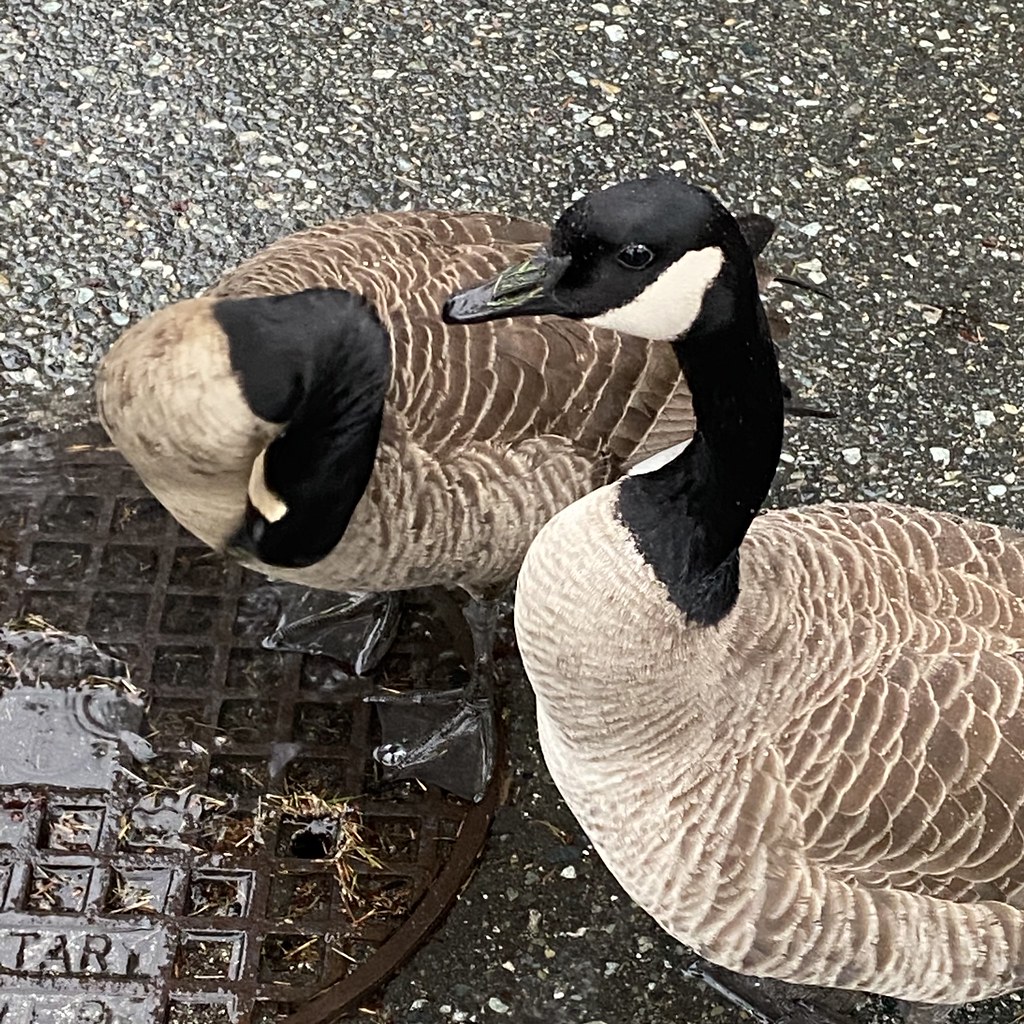
Geese

But in these moments I also remembered to breathe, and to be mindful of my emotions, especially those that have crippled me.  Hanh tells how we can speak allowed a mantra when we are dealing with difficult emotions as a way of recognizing them and being mindful of them. And so I say this to myself when I breathe in through my nose, and out through my mouth:

Breathing in—I know that I am breathing in; breathing out—I know that I am breathing out. Breathing in—I know that I am sad, lonely and lost; breathing out—I know that this fear is still in me.

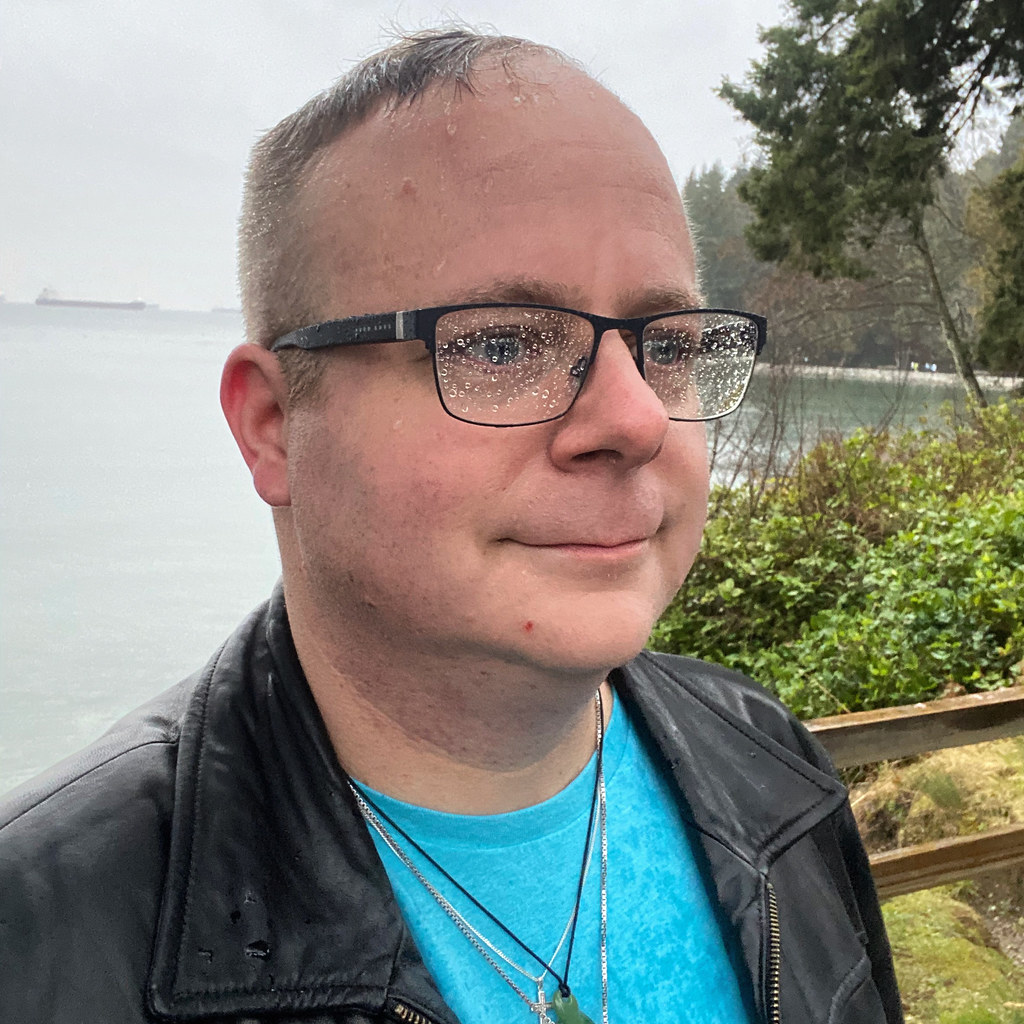
But after a time, because of this mindfulness that has allowing me to care for and love myself, I have been able to begin shedding these layers of sadness so I can feel balanced again. So after my walk on Tuesday, I looked like this:
Content

A bit more ready to create again. 

Sources

Hanh, Thich Nhat. True Love: A Practice for Awakening the Heart. Translated by Sherab Chödzin Kohn, Boston & London, Shambhala, 2011. Kindle.

playing around with contrast: inside a fine art photographic technique

contrast adjustments…

This short journal post is from a presentation I gave in spring 2019 where I discussed how adjusting your contrast can be an interesting way of shooting different subjects and landscapes. This process helps to darken (underexpose) or lighten (overexpose) a scene that I have found can help to add new conceptual meaning to whatever is being photographed.

Ultimately, this is something that can easily be done in camera. Just play around with increasing or decreasing your shutter speed or aperture (f-stop) to create photographs that are purposely under or over exposed. Alternatively, you can shoot a perfectly exposed photo in camera and then fiddle with the contrast in Photoshop, as I did with this photo, titled wal-art 3, of an aisle in Walmart I took in August 2012 and then overexposed it (to make it look brighter than it should) using Photoshop…

wal-art 3

To be completely honest, I had not originally planned to overexpose the images. I only did it after finding out that for some reason, the focus was soft across my images. By overexposing them, you didn’t notice that and it also added a whole other depth to how the content of the photo was presented.

Artist & photographer Paul Graham has also overexposed some of his photographs, as he did with his American Night series of photographs, like this one, American Night #16, from 2000…

wal-art 3

Graham overexposes his photos so much that they at times almost appear ghostly white, with very little of the photo’s original colour left behind. Graham’s American Night photographs formed part of a series of photographs he shot using this technique (as was my wal-art shot, it too is part of a on-going series).

Doing it in camera can be a bit risky as you are ultimately stuck with what you get. If you are at a location you might not be able to return to, it might be better to shoot a perfectly exposed image and then play with it later in Photoshop. Or, if you have time, take a perfectly exposed shot and then take a few shots where you experiment in camera.

making contrast adjustment in photoshop…

If you really want to over or underexpose in Photoshop, here’s where to look:

IMAGE > ADJUSTMENTS > BRIGHTNESS / CONTRAST

This provides a good start, but sometimes it’s not enough so go to the next option…

IMAGE > ADJUSTMENTS > EXPOSURE

Then adjust ‘exposure,’ and possibly adjust ‘gamma correction’ if needed.

Finally, you can also adjust your LEVELS or CURVES (also found in the IMAGE > ADJUSTMENTS drop-down menu). In LEVELS, you can play with the INPUT and OUTPUT LEVELS; and in curves you can adjust, well the curves (Cross Process can be fun too).

More Inspiration…

Unlike other alternative photographic process topics I’ve been exploring, there aren’t many YouTube videos on this specific topic, but I did find one…

This next video gives some solid tips for creating soft and airy photographs by experimenting with some of the ideas talked about here, but also by exploring other elements from lens choice to other camera settings which allow the backgrounds to appear under or over exposed while keeping the main subjects nicely exposed and in focus…

playing with motion blur: inside an alternative photographic process

I learned about this technique first from photographer Eddie Soloway, and then from Kwantlen Polytechnic University professor, Dr. Ross Laird, who learned it from photographer Diego Samper. This journal post is based on a presentation I developed about it in 2019.

While many good photos will be free of motion blur, this is another area where you can break the rules, especially if you want something that looks abstract. It’s not a regular motion blur you might have learned about in an intro photo class – where you might see a photo of a car speeding by and the background is blurred, or cars speeding across the frame appearing like streaks, with their surroundings in sharp focus. Rather, the entire frame becomes blurred to various degrees to create an abstracted image.

How to accomplish this is simple:

  •  Set your camera’s shutter speed so that it’s open longer (for a second, or seconds, or even longer by using the bulb setting). By doing this you are slowing down the shutter speed, which is the amount of time a camera’s shutter is open to allow light to fall onto the camera’s sensor. The longer the shutter is open, the higher the chance you can end up with motion blur.

  • Then, as you click to take your shot, introduce movement by physically moving your camera by panning up and down or left to right.

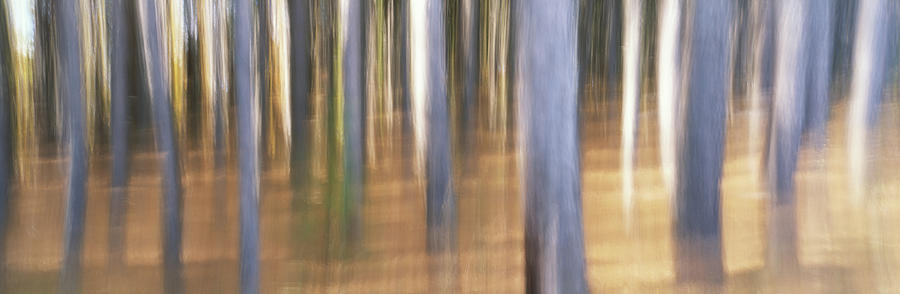
Eddie Soloway’s work has an almost impressionistic or fauvist quality in how he uses the technique to capture the essence of the scene he’s shooting – creating a dreamlike world that emphasizes both the light and colour that can be found in nature as seen in Pine Trees Blurred - Wisconsin (2019) and New England Autumn…

eddie soloway - motion blur...

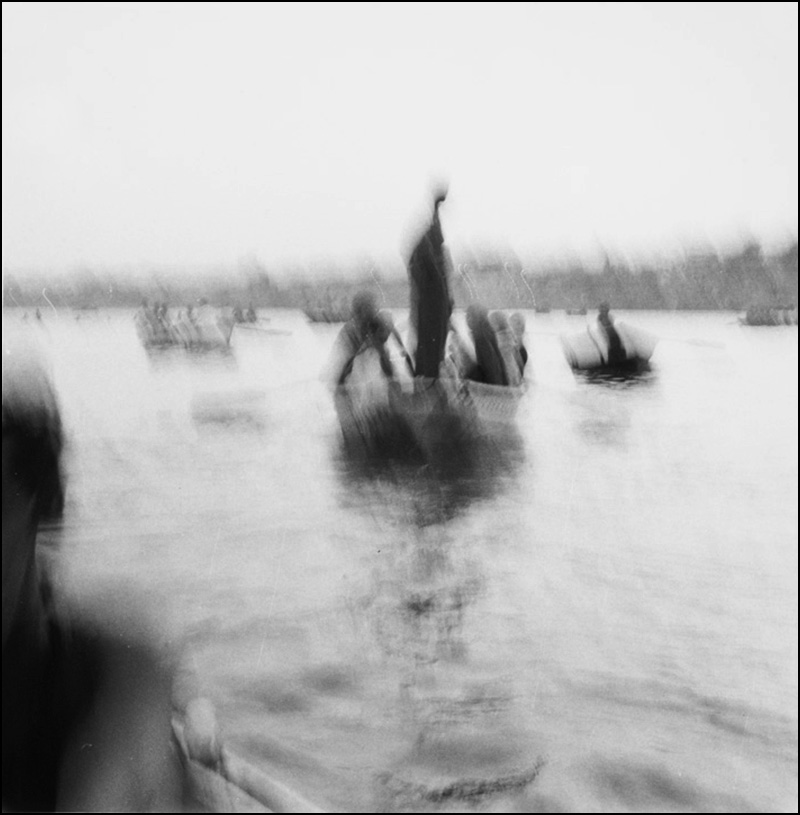
Samper introduces another concept to the equation by not paying attention to the viewfinder. He’ll raise the camera high above his head, pointing down towards a scene, or hold it arms length from his body, to create different points of view. When he does this, he also isn’t afraid to keep things on bulb and he varies how long he exposes the photo for. Laird described this as being a challenging as it does create a lot of photos that are totally blown out. But every now and then Laird said you get a gem, like this one by Samper…

diego samper - motion blur...

Samper also shoots people and man-made objects using this technique, which introduces elements and ideas that are quite different from Soloway. I think Samper converted the photo to black & white in Photoshop (although he may have even shot it in camera - either digitally or on film, I’m not sure), although as shown in this gallery, he does produce a lot of similar photographs using this technique in colour.

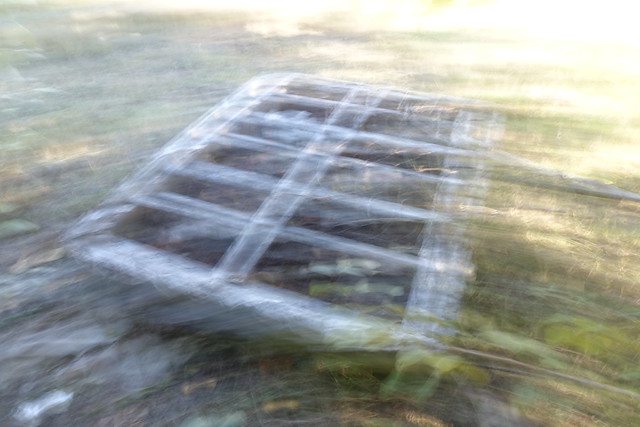
 Finally, here is my attempt at this technique…

an abandoned box spring...

More Inspiration…

Chin, Jimmy. Tips for Capturing Motion Blur Photography. MasterClass, August 2018.

Rowse, Darren. How to Capture Motion Blur in Photography. Digital Photography School, January 2014.


shooting 'through': the art of the found filter...

In photography, a fun challenge can be to look for things you can “shoot through,” things that are a kind of found filter, one that already exists in nature. This journal entry, which is based on a presentation I first did in February 2019, will explore a number of different filters you can use as a starting point for thinking about this idea.

Read More